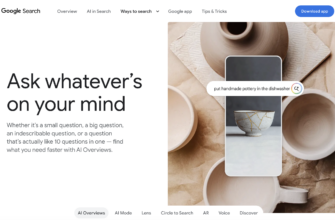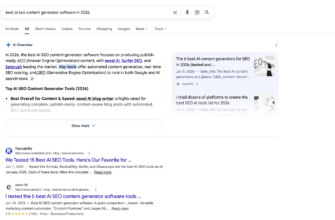
AI-powered search engines now account for more than 1 billion queries per day worldwide, fundamentally changing how websites earn visibility and traffic. This guide solves a specific problem: how to optimize your content so it appears—and gets attributed—in AI-generated answers, whether those come from ChatGPT, Google AI Overviews, Perplexity, or emerging LLM-based platforms like DeepSeek.
It’s built for SEO leads, content strategists, digital marketers, and founders who need practical frameworks to adapt their existing search programs to the AI-first era without abandoning traditional ranking fundamentals. As per ROI Revolution, embracing AI-driven search behavior is crucial as the industry pivots. The result is a set of SEO strategies that preserve what still works while upgrading execution for the AI-enhanced search environment.
- What’s included in this guide (scan list)
- Who this is not for / scope limits
- Assumptions & definitions used throughout
- Author disclosure and editorial standards
- Why AI search changes SEO outcomes in 2026
- AI Search Engine Optimization
- Definition
- Search Model Changes
- Personalization
- What to Measure
- Ranking Systems and SERP Features
- AI Overviews
- Featured Snippets
- Zero-Click Results
- Content Strategy
- Search Intent
- Query Targeting
- Topical Authority
- Topic Clusters
- Internal Linking
- Content Refresh
- Content Structure for AI Visibility
- Heading Structure
- Answer Placement
- List Formats
- Table Formats
- Trust Signals and E-E-A-T
- E-E-A-T
- Citations
- Brand Mentions
- Consistency
- Technical SEO Foundations
- Crawlability
- Indexability
- Rendering
- Site Architecture
- Performance
- Mobile Usability
- Accessibility
- Structured Data for AI Search
- Schema Types
- Validation
- Maintenance
- Multimedia and Multimodal Search
- Image Optimization
- Video Optimization
- Voice Search
- Accessibility Overlap
- Tools and Workflows
- Content Research Tools
- Content Generation Tools
- Content Optimization Tools
- Technical Audit Tools
- Workflow Automation
- Measurement and Reporting
- Visibility Tracking
- Conversion Tracking
- Attribution
- Common Pitfalls
- AI-Driven SEO vs Traditional SEO
- AI-Driven SEO
- Traditional SEO
- Hybrid SEO
- FAQ
- How do I know if AI Overviews hurt my traffic vs help conversions?
- What should I do if my content is used but not cited?
- How often should I refresh content for AI citation?
- What page length tends to get cited for YMYL vs non-YMYL?
- How many sources do AI systems typically cite and what does that imply for content packaging?
- How do I optimize for AI answers when CTR drops (zero-click)?
- Do HTTP status codes / technical correctness impact AI visibility?
- How do I track visibility in AI answers with existing tools?
- Should I publish a dedicated FAQ page vs embed FAQs in guides?
- What’s the fastest ‘first 30 days’ workflow to become citable?
- How do snippet controls (nosnippet, max-snippet, noindex) affect AI visibility?
- What’s the difference between being ranked, cited, and used as background context—and what should I do in each case?
- Conclusion
- Next 30 Days: Your Action Roadmap
- What to Measure Now That AI Answers Reduce Clicks
- Risk-Aware Operating Guardrails
What’s included in this guide (scan list)
- AI Search Landscape Overview
- AI Search Engine Optimization Fundamentals
- How AI Ranking Systems and SERP Features Work
- Content Strategy for AI Visibility
- Content Structure and Formatting for AI Extraction
- Trust Signals and E-E-A-T for AI Attribution
- Technical SEO Foundations for AI Crawlers
- Structured Data and Schema Implementation
- Multimedia Optimization for Multimodal Search
- AI Search Optimization Tools and Platforms
- Measurement and Performance Tracking
- Risks and Compliance Considerations
- Use Cases and Industry Applications
- AI vs Traditional SEO: What Changes and What Stays
- Frequently Asked Questions
Who this is not for / scope limits
- Not a beginner SEO primer—assumes working knowledge of keywords, backlinks, and SERP basics
- Not a prompt library or ChatGPT optimization cheat sheet
- Not legal advice on copyright, fair use, or AI training data compliance
- Not a guarantee of ranking—AI platform behaviors change frequently and without notice
- Does not cover paid placements or sponsored AI results (where applicable)
Assumptions & definitions used throughout
- AI Overviews: Google’s LLM-generated summary boxes that appear above traditional blue links in search results
- Zero-click: A search session where the user receives a complete answer without clicking through to a website
- Citation/Attribution: When an AI-generated answer includes a visible link or reference to your content as a source
- Multimodal search: Queries that combine or return text, images, video, and audio results
- E-E-A-T: Experience, Expertise, Authoritativeness, and Trustworthiness—Google’s framework for content quality assessment
Author disclosure and editorial standards
Editorial approach: All recommendations in this guide are based on documented platform behavior, primary source documentation (Google Search Central, OpenAI usage policies, etc.), and reproducible testing. When relying on secondary sources or third-party research, we cite them explicitly. Data points are verified against official announcements or peer-reviewed studies where available, with fact checking applied to all key metrics and platform claims.
Why AI search changes SEO outcomes in 2026
Nearly 60% of informational search queries now trigger some form of AI-generated content in search results, whether through Google AI Overviews, Bing Chat, or standalone platforms like Perplexity and SearchGPT. That changes the value equation for organic visibility.
Traditional SEO rewarded you for ranking a URL in position 1–3 to capture clicks. AI search optimization rewards you for becoming the cited source inside an AI-generated answer—even when that answer sits above all traditional results. According to Symphonic Digital, AI-generated elements in SERPs are more prevalent than ever.
The hard part is attribution. Data from early 2025 shows that AI Overviews on informational queries reduce organic click-through rates by 18–64%, depending on query complexity and answer completeness. Users increasingly treat the AI-generated summary as the final answer, scrolling past traditional links entirely. As noted by Finch, this results in reduced clickthrough on informational queries, challenging traditional SEO impacts.
The upside is clear: if you restructure content to maximize citation probability, you can still win visibility—even in zero-click SERPs. AI systems tend to select sources that demonstrate factual accuracy, clear topical authority, and semantic structure that’s easy to extract and attribute. The framework below walks through content strategy, technical implementation, trust signals, and measurement, with actionable protocols your team can deploy immediately.
AI Search Engine Optimization
AI Search Engine Optimization optimizes content to be selected, summarized, and cited by AI-assisted search interfaces rather than merely ranked as traditional blue links. This practice addresses how generative AI systems extract, synthesize, and attribute information within search experiences powered by large language models. As of January 2026, 37% of consumers initiate searches with AI tools, and 60% of respondents encountered SERPs featuring AI-generated overviews within a single month, making AI-ready content structure essential for maintaining search visibility.
Definition
AI SEO encompasses the technical and editorial decisions that increase the likelihood your content becomes source material for AI-synthesized answers displayed in Google Search, ChatGPT, and other generative platforms. Unlike traditional ranking optimization that positions entire pages, AI SEO prepares discrete content passages for extraction, reassembly, and citation within algorithmically generated responses.
Scope boundaries:
- Includes: Structuring content for passage-level extraction, implementing machine-readable markup that clarifies entity relationships and claim boundaries, and maintaining citation-ready attribution signals such as author credentials, publication dates, and verifiable sources.
- Does not mean: Gaming prompt behavior through keyword stuffing variations, publishing auto-generated commodity pages designed solely for AI ingestion, or abandoning fundamental crawlability and indexation practices.
- Overlaps with traditional SEO: Foundational technical requirements remain identical—crawlable architecture, mobile usability, HTTPS security—while relevance signals and trust indicators (domain authority, backlink profiles) continue influencing which pages enter retrieval pools.
How AI systems use your page:
- Retrieval: The search model identifies candidate documents matching semantic intent through vector similarity rather than strict keyword presence, expanding beyond exact-match queries to conceptually related content.
- Passage extraction: Algorithms isolate discrete text blocks under specific headings that directly address query components, prioritizing self-contained explanations over context-dependent prose.
- Synthesis: The AI model combines extracted passages from multiple sources into a cohesive narrative, often paraphrasing while preserving factual claims and technical details.
- Attribution/citation: The system attaches source links to specific claims within the generated answer, creating visibility opportunities distinct from traditional ranking positions (e.g., appearing as a cited source within an AI Overview).
- UI display: The synthesized response appears above or alongside traditional organic results, with citations presented as inline links or footnoted references.
- User interaction: Click decisions shift from choosing among ten blue links to evaluating whether the AI-generated answer satisfies the query, with clicks reserved for verification or deeper exploration.
Search Model Changes
Retrieval shifting toward semantic relevance and passage-level selection fundamentally alters content planning. Traditional keyword optimization assumed page-level ranking, but AI systems scan for discrete passages that answer specific query facets. A 2,000-word guide might contribute only a 120-word section on “installation steps” to an AI-generated answer, making granular heading structures and localized completeness critical. Each H3 and H4 must function as a potential extraction candidate, answering a micro-query without requiring surrounding context.
Answer synthesis creating “winner-takes-most” visibility patterns concentrates attention on content offering novel information rather than repetitive restatements. When AI models compare ten sources discussing “SSL certificate types,” they prioritize passages introducing distinctions, edge cases, or recent developments absent from competing pages. This creates a zero-sum environment where unique information gain determines citation likelihood, rewarding original content, non-commodity content, and expert commentary over commodity explanations. Generic overviews face systematic exclusion unless they establish clear explanatory superiority.
Attribution/citation behaviors function as a ranking-adjacent outcome because visibility now depends on being selected as a source rather than occupying position three versus position five. Cited articles in AI-generated answers average eight sources (ranging from four to sixteen), with YMYL content typically requiring approximately 1,000 words for citation consideration and general informational queries favoring 1,500-word articles. These patterns suggest AI systems apply implicit completeness thresholds when evaluating source credibility. Explicit author bylines, publication timestamps, and inline citations to authoritative external sources improve selection probability by signaling editorial rigor.
Implications for content design:
- Write self-contained passages beneath descriptive H3/H4 headings that directly address the heading’s implied question
- Ensure each significant claim includes an adjacent source attribution or date reference to facilitate verification
- Maintain visible last-updated timestamps on evergreen content to signal currency
- Avoid burying definitions or key concepts mid-paragraph; surface them in opening sentences or dedicated micro-sections
- Structure comparison content (e.g., “Tool A vs. Tool B”) with parallel formatting that AI models can parse as structured comparison
- Provide explicit scope qualifiers (“for enterprise deployments,” “in European markets”) to improve relevance matching across personalized contexts
- Use numbered sequences for procedural content to preserve logical order during extraction
Personalization
Personalization operates across three distinct layers that determine which content enters retrieval pools and how AI systems synthesize answers for individual users.
Query context encompasses device type, geographic location, and language settings. A mobile user searching “best CRM” from Austin receives AI-generated answers emphasizing mobile app quality and regional service availability, while a desktop query from Munich prioritizes GDPR compliance features and European vendor options.
User history and preferences incorporate previous search behavior, clicked results, and brand affinity signals accumulated across sessions.
Task intent and state differentiate research-phase exploration from purchase-readiness evaluation and post-purchase troubleshooting.
Mitigation strategy:
Produce robust canonical answers that remain relevant across user variants while avoiding thin duplicate creation. Structure content with a core explanation followed by optional variant callouts—for instance, a foundational definition of “conversion rate optimization” followed by bracketed notes like “[For e-commerce sites, also consider cart abandonment recovery]” or “[B2B teams should prioritize lead quality over volume].” Use explicit geographic and audience qualifiers such as “in the United States,” “for small business owners,” or “if operating physical retail locations” to help AI systems select appropriate passages for personalized synthesis without requiring separate pages.
What to Measure
Track citation and visibility shifts rather than ranking positions exclusively, since AI-mediated search reduces traditional organic click opportunities. Monitor whether your content appears as attributed sources within AI Overviews and ChatGPT responses, noting which passages get extracted and how frequently specific pages earn citations.
Measure clickthrough rate changes segmented by query type, recognizing that informational queries may experience CTR declines when AI-generated answers satisfy user intent directly on the SERP. Combine impression data with attribution tracking to understand whether reduced clicks reflect successful on-SERP visibility (your content cited prominently) or complete exclusion from AI synthesis processes—two scenarios requiring opposite strategic responses.
Ranking Systems and SERP Features
Modern SERP features fundamentally reshape visibility dynamics: ranking position no longer guarantees traffic, because features like AI Overviews, featured snippets, and knowledge panels intercept clicks before users reach blue links. Your job is to optimize for three layers:
- eligibility for inclusion
- extractability of clean answers
- trust signals that drive attribution
AI Overviews
AI Overviews represent Google’s most disruptive ranking intervention to date, with 60% of searchers now encountering AI-generated summaries above organic results. Unlike traditional snippets that simply reformat existing content, AI Overviews synthesize information from multiple sources, changing how pages capture visibility.
Eligibility determines whether Google considers your content authoritative enough to inform AI responses—this hinges on domain trust, content freshness, and topical alignment. Extraction governs how cleanly the AI can pull usable information from your pages—poorly structured content gets ignored even when eligible. Attribution controls when and how your URL appears as a cited source—typically triggered when you provide the clearest or most complete answer to a specific sub-question within the broader query.
To improve extractability, implement these on-page patterns:
- write single-paragraph definitions between 40-60 words that directly answer specific questions
- use labeled step sequences with explicit action verbs (e.g., “Step 1: Configure,” not “First, you should configure”)
- include constraint statements that clarify when advice applies (“This approach works for sites under 10,000 pages”)
- add explicit units to all measurements (“15 seconds” instead of “quickly”)
- timestamp content with publication and update dates
- embed short Q&A pairs within longer sections using actual question phrasing users might ask
Citation behavior implications vary significantly across AI systems—some provide no sources at all, while others link generously. That’s why you optimize for extractability first (clear, complete answers) and trust second (author credentials, entity associations, external validation signals). Don’t rely on traditional EEAT implementation alone; ensure every claim can be isolated and verified within a single paragraph.
Monitoring checklist for AI Overviews:
- Build a core query set representing your key topics and track AIO presence weekly—not daily, since feature volatility creates false urgency.
- Log citation presence/absence patterns to identify which content types get attributed versus synthesized without links.
- Check brand mention accuracy within AI summaries—misattributions damage trust more than omissions.
- Compare freshness cadence: how quickly do AI Overviews reflect your latest updates versus organic rankings.
- Measure traffic delta between queries with/without AI Overviews to quantify cannibalization.
- Track whether your citations appear in expandable sections or primary summaries—placement affects click-through likelihood.
Featured Snippets
Featured snippets remain valuable despite AI Overview competition, because they still appear for millions of queries and capture clicks from users who distrust synthesized answers. The key is matching format to intent.
Snippet format decision tree:
- Definition intent (what is X, what does Y mean) → Target 40-60 word paragraph blocks that name the entity, define it, and explain one core characteristic.
- List/process intent (how to X, steps to Y) → Format 5-8 numbered steps with strong verb starters and result statements.
- Comparison intent (X vs Y, best Z for) → Build tables with 3-6 rows and 2-4 columns using clear headers.
CTR for general informational queries drops when snippets appear, so your content must provide value beyond the SERP. Use snippets to pull users into deeper, related content rather than trying to answer everything inside the snippet.
Snippet stability and loss reasons:
- Intent mismatch: Fix by analyzing “People also ask” and competitor snippets to identify the dominant interpretation.
- Stale dates: Add month-year timestamps to headers and refresh statistics quarterly.
- Thin supporting context: Ensure 200+ words of related content follow your snippet-targeted paragraph.
- Ambiguous entities: Repeat the full entity name in your snippet paragraph.
- Cleaner extraction from competitors: Audit the current snippet holder and match their structural clarity.
Zero-Click Results
Zero-click searches are the biggest challenge to traditional SEO ROI, because visibility no longer converts to traffic by default. Use this taxonomy to decide where to invest.
- AI answers (Overviews, Perplexity, ChatGPT) suppress clicks—mitigation lever: own the underlying data through original research that AI systems must cite.
- Featured snippets answer simple queries—mitigation lever: target awareness-stage queries that lead naturally to consideration-stage content.
- Knowledge panels pull structured data about entities—mitigation lever: claim and optimize your Google Business Profile and Knowledge Graph entities.
- Local packs satisfy location queries—mitigation lever: maintain aggressive review generation and citation consistency.
- “People also ask” boxes expand inline—mitigation lever: target PAA questions with dedicated H2 sections.
- Calculators and converters solve utilities in SERPs—mitigation lever: build tools with value beyond the SERP.
- Instant answers provide direct facts—mitigation lever: avoid competing; target adjacent queries where you add analysis.
Outcome metrics framework:
Separate measurement into three layers:
- Visibility metrics: impressions for queries where AI Overviews appear, percentage of target queries triggering snippets, frequency of knowledge panel displays.
- Engagement metrics: CTR delta comparing featured versus non-featured queries, scroll depth on pages reached from snippets, time-on-site for snippet-driven traffic versus organic.
- Business metrics: assisted conversions where users encountered your brand in a feature before converting elsewhere, brand search lift following snippet or AIO exposure, cost-per-acquisition differences between traditional and featured traffic sources.
Segment branded vs non-branded behavior and informational vs transactional intent. That’s where the real signal is.
Content Strategy
AI-driven search surfaces change content strategy from chasing rankings to earning citations and qualified clicks. In this environment, content must be structured for passage-level retrieval, not just page-level relevance.
The measurable outcomes this section supports include citation frequency in AI Overviews, qualified traffic from AI-mediated search, and conversion from users who arrive with pre-validated intent. This requires rethinking how you classify search intent, target queries, build topical authority, structure topic clusters, deploy internal links, and maintain freshness. As user behavior shifts to AI-first discovery, content strategy must account for the fact that users arrive with pre-validated intent and higher expectations for precision—and that better customer engagement depends on delivering satisfying content that answers the query without forcing extra clicks. (Source: ROI Revolution)
Search Intent
Build an intent taxonomy specifically for AI search surfaces: informational, comparative, procedural, navigational/brand, transactional, and “synthesis” intent (user expects an aggregated answer). Each intent type demands a tailored content format and on-page layout.
Informational intent requires definition-first formatting. Put the direct answer in the first 100 words, then expand with examples. Common failure: burying the definition under preamble.
Comparative intent performs best with decision tables or side-by-side feature matrices. Put criteria on the first screen. Common failure: narrative comparisons that force inference.
Procedural intent demands numbered steps with clear action verbs. Put steps immediately after a short overview. Common failure: mixing prerequisites, steps, and troubleshooting in one block.
Navigational/brand intent requires prominent entity identification and official resource links in the opening paragraph. Common failure: omitting the full entity name, location, or official domain.
Transactional intent benefits from pricing tables, availability data, and clear calls-to-action placed after specifications. Common failure: vague features without quantifiable constraints.
Synthesis intent needs a summary block followed by source-attributed sub-sections. Common failure: presenting one viewpoint as universal truth.
Run this intent mismatch diagnostic before publishing:
- Does the query ask for steps, but your page offers historical context or theory first?
- Does the query imply constraints (budget, region, version, skill level), but your content remains generic?
- Does the query seek a comparison, but you present sequential reviews instead of parallel criteria?
- Does the query expect a quick answer, but your first screen contains only context-setting?
- Does the query include temporal modifiers (“latest”, “2026”), but your content lacks dated information?
- Does the query suggest decision-making, but your content provides only informational background without decision criteria?
- Does the query use plural forms (e.g., “tools”, “methods”), but your content focuses on a single option without alternatives?
For multi-intent queries, split into named sub-sections that can be independently cited: “Quick answer,” “Step-by-step,” and “When it doesn’t apply.”
Query Targeting
Define a query selection rubric that goes beyond volume metrics. Require the writer to document four elements before creating content:
- (a) the user decision to be made
- (b) the implied constraints
- (c) the expected evidence type
- (d) the “citation friendliness” of the query
Citation-friendly queries can be answered with verifiable, stable facts. Low-citation queries are speculative or unbounded.
Introduce query fan-out mapping as a planning step. List 8–12 adjacent questions an AI system might expand into based on the primary query, then assign each to one of three categories:
- on-page subheading coverage
- a supporting web page in the cluster
- out-of-scope
Also enforce primary vs secondary query targeting rules to prevent keyword cannibalization: one primary query per URL, secondary queries satisfied under distinct headings with non-overlapping scope. Use Google Search Console to audit overlap and consolidate or differentiate pages accordingly.
Topical Authority
Add a coverage model that defines pillar vs supporting pages with minimum coverage expectations.
- Pillar pages must include definitions, processes, decision criteria, and edge cases.
- Supporting pages answer one narrow job-to-be-done with depth.
Make writers document negative scope (what the pillar won’t cover) to keep clusters clean.
Embed a proof of expertise pattern library where relevant:
- Worked example with assumptions
- Version/date stamps on volatile facts
- Named methodologies
- Documented limitations
- Links to primary sources
- Attribution of claims
Avoid AI-era authority killers:
- commodity rephrasing
- unbounded claims
- missing constraints
- inconsistent terminology
Topic Clusters
Use this cluster blueprint template before production:
- Pillar URL
- 6–10 supporting URLs
- Each supporting page’s unique purpose statement
- Target query
- Required internal links
- The single passage that should be most citable
Add rules for non-overlap: each supporting page must own a distinct subtopic and a distinct SERP feature goal. Then attach a maintenance plan per cluster (evergreen stable vs high-churn) with cadence tied to refresh triggers.
Internal Linking
Create an internal linking spec oriented to passage retrieval:
- Place 2–4 contextual links inside the paragraph that introduces a concept.
- Use descriptive anchor text that names the concept (not “Learn more”).
Link architecture rules:
- Every supporting page links to the pillar in the first 20% of content.
- Pillar links out to every support page from a dedicated “Cluster map” block.
- Add 2–3 lateral links between supports based on task sequence.
Anchor text governance checklist:
- Maintain consistent terminology across anchors.
- Avoid mixing synonyms that imply different entities.
- Use one canonical phrase per concept across the cluster.
- Make anchor text specific enough to preview the destination content.
Content Refresh
Create a refresh decision matrix with 3 tiers (light, medium, heavy) tied to triggers. AI-cited content tends to be fresher than standard SERP-ranking content, which means refresh cadence directly impacts citation probability. (Source: Marketing Aid)
Light refresh triggers (quarterly for high-churn pages, annually for evergreen):
- Ranking drop of 3+ positions for the primary query
- Appearance of new SERP features (e.g., AI Overview added where none existed)
- Minor product updates (e.g., tool UI changes, small feature additions)
Light refresh tasks:
- Update dated passages (e.g., replace “In 2024” with “As of 2026”)
- Add missing constraints identified in search console data
- Replace outdated examples with current ones
- Revalidate outgoing citations
Medium refresh triggers (monthly for high-churn pages, quarterly for evergreen):
- Ranking drop of 5+ positions or exit from top 10
- SERP feature loss
- Significant product/policy changes
- User intent drift observed in Google Search Console
Medium refresh tasks:
- Rewrite the first-screen answer
- Add new H3 sections
- Audit internal links
- Update the “last reviewed” date and add a changelog note
- Improve verifiable specificity in the most citable passage
Heavy refresh triggers (immediate response):
- Ranking drop below position 20 or de-indexing
- Major SERP restructuring
- Major product/policy changes that invalidate advice
- Legal or factual accuracy issues flagged
Heavy refresh tasks:
- Re-audit search intent
- Re-execute query fan-out mapping
- Rewrite conflicting passages
- Consolidate or split pages if cannibalization is detected
- Remove redundant paragraphs
- Re-optimize for the primary query
Add freshness instrumentation: a “last reviewed” date near the top plus a one-sentence “what changed” note for substantial edits.
Content Structure for AI Visibility
AI systems don’t “read” pages like humans. They route queries to headings, extract passages, and recombine answers. That’s why structure is a ranking signal in practice—even when your content is strong.
Heading Structure
Use a clean H2/H3/H4 hierarchy:
- one H2 per major topic
- one primary question or concept per H3
- H4 only for sub-steps, edge cases, or procedural variations
- never nest more than three heading levels in a single section
Avoid vague headings (“Overview”) and multi-intent headings (“Setup and Troubleshooting”).
Question-style H3 templates:
- “What is [Concept/Tool]?”
- “How to [Action/Process]”
- “When should you [Action]?” or “When to use [Option]”**
- “[Option A] vs [Option B]”
- “Why does [Phenomenon] happen?”
Answer Placement
Every H3 should use an “Answer-First block”: 1–2 sentences that directly answer the heading, followed by supporting detail.
Follow the Semantic Triplet constraint: Subject + Verb + Object in the opening sentence, and avoid pronouns in the first 30–40 words.
Passage indexing rules: define acronyms on first use within the block, avoid “as mentioned above,” repeat the entity name (don’t rely on “this/it”), keep paragraphs to one idea, and stick to 2–4 line paragraphs.
Citation likelihood: Research from MarketingAid.io shows that cited articles typically range from 1,500–2,500 words with an average of 3.2 citations per article, indicating AI systems favor tightly-structured, self-contained passages over lengthy narrative blocks.
List Formats
Use the right list type for the job:
- Step-by-step process lists (ordered)
- Criteria/checklist lists (unordered)
- Decision lists (ordered with conditional language)
Keep bullets non-overlapping and split multi-insight bullets into separate items.
LLM-citable structural compliance checklist:
- Heading matches the immediate paragraph content exactly
- First paragraph contains complete answer in 1–2 sentences
- Opening sentence follows Subject + Verb + Object structure
- No pronouns (“it,” “this,” “they”) in first 40 words
- Acronyms defined on first use within each H3 block
- Each paragraph contains one idea maximum
- Supporting sources placed immediately after claims
- List bullets start with strong verbs or clear descriptors
- Tables include explicit header rows with no merged cells
- No vague headings or multiple intents per section
Table Formats
Use tables when decisions depend on comparison or format selection.
Format selector table:
| Query/Intent Type | Best Structure | Why It’s Extractable | Common Failure Mode |
|---|---|---|---|
| Definition (“What is X?”) | Paragraph with semantic triplet opening | AI models parse subject-verb-object as complete units | Using pronouns in first sentence breaks extraction |
| Process (“How to X”) | Ordered list with action verbs | Sequential numbering signals step relationships | Multi-sentence bullets hiding discrete steps |
| Comparison (“X vs Y”) | Table with attribute rows | Structured cells enable side-by-side parsing | Narrative paragraphs requiring inference |
| Decision (“When to X”) | Unordered list with conditionals | “If/when” constructions match query phrasing | Embedding criteria in long paragraphs |
Comparison table template:
| Content Option | Use When | Pros for AI Visibility | Cons | First 50 Words Must Include |
|---|---|---|---|---|
| Answer-first paragraph | Every H3 section | Direct semantic match to queries, high snippet eligibility | Requires upfront clarity | Complete answer + entity name |
| Ordered list | Multi-step processes | Clear sequence for instruction-following queries | Poor for non-sequential info | Action verb + outcome |
| Table | 3+ attribute comparisons | Structured data extraction, featured snippet potential | Harder to write naturally | Column headers defining all attributes |
| Unordered list | Criteria or checklists | Scannable for AI and humans | Can feel fragmented if overused | Topic phrase per bullet |
Trust Signals and E-E-A-T
If you want reliable AI attribution, you need visible trust signals. Not as a “nice-to-have,” but as a gating factor for whether your content is eligible to be selected and cited.
Before publishing any AI-optimized content, verify these trust signals are in place:
- Author attribution block with credentials and first-hand experience statement positioned near the title
- Primary source citations immediately after factual claims, with publication dates when available
- Brand consistency across title, intro, About page, and author bio—no conflicting claims
- Last updated date displayed prominently, with a change log for significant revisions
- Reviewer disclosure on YMYL content (finance, health, legal) including name and credentials
- Contact/ownership link visible in footer or author block
- Unlinked brand mentions tracked in AI answers and third-party summaries
- Technical baseline verified: no broken citations, outdated screenshots, or HTTP errors
- Citation density target of at least 3-5 citations per 1,000 words for fact-heavy sections
- Editorial policy link accessible from main navigation or footer
E-E-A-T
Google’s E-E-A-T framework (Experience, Expertise, Authoritativeness, Trustworthiness) remains the foundation of content quality assessment—and AI systems increasingly mirror this evaluation logic when selecting sources.
Add an on-page E-E-A-T block near the title/byline or right after the introduction. Include the author’s name, credential, first-hand experience statement, last reviewed date, and links to the editorial policy and contact/ownership information. For YMYL topics, add a reviewer’s name and credential and disclose the review process.
Experience needs proof. The strongest artifacts are:
- screenshots of actual tooling
- original datasets
- step logs with timestamps
- before/after metrics
Avoid generic “in my experience” phrasing without specifics.
Citations
Citations are the evidence layer AI systems use to validate claims. Use immediate inline citations (not footnotes) for all stats, “as of” statements, platform behaviors, policy requirements, and technical specifications.
Apply a three-tier rubric:
- Tier 1: Primary sources
- Tier 2: Credible secondary analysis
- Tier 3: Weak/avoid
Keep citations locally scannable. Don’t bury a stat and cite it three sentences later.
Brand Mentions
Unlinked brand mentions still matter because AI systems use entity recognition to map relationships and authority. Earn mentions through original research, expert commentary, and free tools or templates.
Then keep entity hygiene tight: consistent Organization naming, stable About page linking, consistent social handles, and brand monitoring across ChatGPT, Perplexity, and Google AI Overviews.
Consistency
Trust collapses when core claims conflict across your site. Build a consistency map across title/H1, meta description, intro, About page, author bios, editorial policy page, and pricing pages.
Google’s May 2025 guidance for succeeding in AI search emphasizes that technical baseline trust starts with a valid success response: AI systems can’t cite pages they can’t fetch. According to Google Search Central, errors (4xx, 5xx) or slow responses undermine discoverability and citation eligibility, even if your content quality is high.
Before publishing, run a numeric and naming consistency scan across the draft: dates, percentages, product names, and entity spelling.
Technical SEO Foundations
Technical SEO establishes the pipeline that allows search engines to discover, interpret, and serve your content—crawlability enables rendering, rendering enables indexability, and indexability determines whether your pages qualify for ranking or AI Overview inclusion.
Crawlability
Crawlability determines whether Googlebot can access and navigate your site’s pages.
Minimum viable crawl access checklist:
- Robots.txt allow/disallow patterns: Verify your robots.txt file doesn’t block critical pages or directories. Confirm using GSC’s robots.txt Tester tool.
- XML sitemap inclusion: Ensure your XML sitemap lists all important URLs and is submitted in Search Console.
- Canonical URL discoverability: Confirm canonical URLs resolve with HTTP 200 status codes and aren’t redirect chains.
- Status codes: Pages must return HTTP 200; persistent 4xx/5xx prevents indexing.
- Redirect chain length: Limit redirect chains to one hop (maximum two).
- Internal link depth: Keep important pages within three clicks from the homepage.
Robots directives that commonly break AI visibility:
- disallowing key content paths
- staging blocks left in production
- overly broad parameter blocks
- blocked JS/CSS/image resources required for rendering
Indexability
Indexability controls whether crawled pages qualify for inclusion in Google’s index.
Indexability gates:
- robots blocking
- noindex directives
- canonicalization
- soft-404 detection
- duplicate clustering
Indexability troubleshooting table:
| Issue | Typical cause | Where to confirm | Fix | Side-effect/risk |
|---|---|---|---|---|
| Noindex | Meta tag or HTTP header added during development and not removed | GSC Coverage report (“Excluded by ‘noindex’ tag”); view page source for <meta name="robots" content="noindex"> | Remove noindex directive from HTML or HTTP headers | Immediate re-crawl may take days; monitor GSC for indexing confirmation |
| Incorrect canonical | CMS or plugin misconfiguration pointing to wrong URL | GSC URL Inspection tool shows “User-declared canonical” vs. “Google-selected canonical” mismatch | Update canonical tag to point to the preferred URL; ensure consistency across pagination and parameters | May cause temporary ranking drops if Google re-consolidates signals |
| Parameter duplication | URL parameters creating duplicate versions (e.g., session IDs, tracking codes) | GSC Coverage “Duplicate, submitted URL not selected as canonical”; check URL structure in sitemap | Use parameter handling in GSC or canonical tags; implement URL parameter best practices | Over-canonicalization can accidentally exclude valid variants |
| Faceted navigation indexing | E-commerce filter combinations generating thousands of indexable URLs | GSC Coverage showing massive “Discovered – currently not indexed” counts; crawl logs reveal facet URLs | Add noindex to faceted URLs or use robots.txt; consolidate with canonicals to parent category | May reduce internal linking value if implemented incorrectly |
| Thin/near-duplicate pages | Template-generated pages with minimal unique content (e.g., location pages with boilerplate text) | GSC Coverage “Crawled – currently not indexed” or “Duplicate”; manual review shows low word count/uniqueness | Enrich content with location-specific details; consolidate pages or noindex low-value variants | Requires content investment; risk of removing pages with existing traffic |
Rendering
Rendering determines whether Googlebot can execute JavaScript and access dynamically loaded content.
Rendering failure modes for modern JS sites:
- blocked JS/CSS
- hydration mismatch
- delayed content behind interaction
- client-side routing without indexable URLs
- resource timeouts
Use GSC URL Inspection → “View crawled page” to compare HTML vs rendered output.
Site Architecture
Site architecture shapes how users and crawlers navigate your content.
- Use descriptive anchor text in internal links.
- Keep priority pages within three clicks.
- Use hub-and-spoke navigation that mirrors topic clusters.
Performance
Performance affects user signals and whether pages load fast enough to sustain engagement.
Key metrics:
- LCP < 2.5s
- INP < 200ms
- CLS < 0.1
- TTFB < 600ms (ideally < 200ms)
Use a troubleshooting ladder: fix server response first, then render-blocking resources, then media, then third-party scripts.
Mobile Usability
Google uses mobile-first indexing, so parity between mobile and desktop content is non-negotiable.
Common pitfalls:
- missing viewport meta tag
- font sizing too small
- tap targets too close
Accessibility
Accessibility improves machine understanding through semantic structure.
Quick checklist:
- heading hierarchy
- alt text presence
- form labels
- keyboard navigation
- color contrast
- link purpose
- HTML validation
Technical blockers that negate great content:
Noindex tags left from staging; blocked JavaScript/CSS resources; incorrect canonical tags; slow TTFB (>600ms); intrusive mobile interstitials.
Implementation ownership:
Crawlability & Indexability: developers with SEO oversight. Rendering: frontend developers. Site Architecture: shared. Performance: DevOps + frontend + content teams. Mobile Usability & Accessibility: frontend + QA.
Structured Data for AI Search
Structured data translates your content into machine-readable signals that AI systems and search engines can parse, interpret, and surface in enhanced SERP features—from rich snippets to AI-generated citations.
Schema Types
Start with a mapping of schema types to page intent:
- Blog post / Article →
ArticleorBlogPosting - Homepage / About →
Organization - Category / Collection →
BreadcrumbList+CollectionPage - FAQ page →
FAQPage - How-to / Tutorial →
HowTo - Product page →
Product - Local business →
LocalBusiness - Author profile →
Person - Definitional / Entity page →
WebPage+mainEntity
Use stable @id linking across Organization, Person, and WebSite to support entity graphing and knowledge graph consistency.
Validation
Validation is a two-part process: syntactic correctness and search feature eligibility.
- Syntactic validation: Schema Markup Validator (validator.schema.org)
- Search feature eligibility: Google Rich Results Test (search.google.com/test/rich-results)
Successful page retrieval depends on returning an HTTP 200 status code during validation. (Source: Google Search Status)
Maintenance
Schema markup drifts over time. Tie maintenance to cadence and ownership:
- weekly: review GSC Enhancements
- monthly: audit template drift
- per-release: run regression tests
Keep dateModified aligned with material updates. (Source: AI Content Freshness)
Multimedia and Multimodal Search
Multimodal search is now a real SEO surface, not a side project. If your images, videos, and transcripts aren’t crawlable, your content becomes harder to extract—and easier to replace.
Before you optimize any multimodal asset, ensure your page meets this core checklist:
- image filenames are descriptive
- alt text is contextual (not keyword stuffed)
- video transcripts are visible, server-rendered HTML
- structured data includes ImageObject or VideoObject
- voice-optimized answers are 20–30 seconds spoken length and answer-first
- page speed supports lazy-loaded images and noscript fallbacks
Image Optimization
Implementation sequence:
- rename files before upload
- write alt text that passes the context test
- align captions and nearby text for passage indexing
- use responsive delivery with srcset/sizes
- choose formats based on use case
- verify indexability and crawlability
Video Optimization
Minimum viable video SEO package:
- dedicated watch page
- visible on-page transcript
- key moments / chaptering
- VideoObject schema with uploadDate, duration, thumbnailUrl, contentUrl/embedUrl
- align title/description to query targeting without duplicating H1
Voice Search
Voice formatting patterns:
- map 6–10 question variants to a single concise answer
- keep answers 20–30 seconds spoken length
- avoid parentheticals and nested clauses
- spell out acronyms and normalize numbers
Accessibility Overlap
Accessibility improvements also improve AI extraction: captions, transcripts, descriptive link text, alt text, avoiding critical text-in-image, keyboard-navigable controls, and transcript visibility without interaction.
AI Citation Behavior Note: According to Marketing Aid’s analysis of AI search engines, Perplexity provided links to sources 100% of the time (with noted exceptions), and across both search verticals the average number of articles cited was 8. (Source: Marketing Aid’s AI Search Optimization)
Tools and Workflows
AI-citable content production at scale needs a repeatable pipeline with clear handoffs: Research → Brief → Draft → Optimize → Publish/Monitor.
- Research: topical coverage mapping + source acquisition
- Brief: constraints + semantic scaffolding
- Draft: human-AI collaboration + fact integrity
- Optimize: passage-level discoverability
- Publish/Monitor: citation performance tracking
Content Research Tools
Research tools should output topical coverage maps, AI Overview monitoring data, and citation-ready sources.
| Job to be done | Key features to require | What to export/save for citation | Common failure mode | Example tools |
|---|---|---|---|---|
| Topical/cluster discovery | Entity graph visualization, related-query expansion, SERP feature analysis | Keyword clusters with search intent tags, entity co-occurrence lists | Over-reliance on volume metrics without intent validation | Semrush Topic Research, Ahrefs Keywords Explorer |
| SERP/AI Overview monitoring | Position tracking in AI-generated answers, prompt variation testing, source attribution logs | Screenshots or HTML of AI Overview results with timestamps, citation counts | Treating AI Overviews as static when they personalize by query refinement | Google Search Console Performance report (standard SERP), third-party AI monitoring platforms |
| Entity extraction/coverage analysis | Named entity recognition, competitor content gap analysis, semantic density scoring | Entity frequency tables, missing entity reports by competitor URL | Confusing keyword density with semantic relevance; entities need context, not repetition | Semrush’s SEO Writing Assistant (entity suggestions), Google Natural Language API |
| Source gathering for citations | Multi-source database search, recency filters, authority/trustworthiness scoring | Exact URLs, publication dates, author credentials, verbatim quotes with paragraph context | Accepting secondary sources without verification; citation chains break trust | Google Scholar, industry-specific databases (e.g., PubMed for health), official documentation sites |
Content Generation Tools
Use the “prompt package” pattern: Outline prompt, Draft prompt, Fact-check prompt. Then enforce five human-in-the-loop gates:
- claims traceable to sources
- no fabricated stats
- all named entities correct
- differentiating insights present
- YMYL flag sign-off
Content Optimization Tools
Use an explicit order of operations:
- intent/answer block
- heading pass
- entity/semantic coverage
- internal link insertion
- snippet/table formatting
- metadata finalization
Technical Audit Tools
Core checks include HTTP status integrity, crawl/index signals, renderability, canonicalization, structured data validation, and performance.
HTTP status integrity: Successful page requests return HTTP 200. (https://developers.google.com/search/blog/2025/05/succeeding-in-ai-search)
Workflow Automation
Automate decay checks, publication checklist gates, and SERP/AIO monitoring alerts. Then choose tools based on exportability, reproducibility, audit logs, and URL/timestamp provenance.
Measurement and Reporting
Visibility Tracking
AI search visibility tracking needs KPIs that separate presence, citation, and competitive share.
Track:
- AI Overview presence rate
- Citation rate
- Link inclusion rate
- Competitor citation share
According to Finch’s analysis, Google AI Overviews have significantly reduced click-through rates for informational queries, with some content categories experiencing a 60% drop in organic clicks when an AI Overview appears. Visibility reporting must account for reduced clicks in informational SERPs and prioritize citation and share-of-voice metrics instead of relying solely on traditional traffic data. (Source: Google AI Overview SEO Optimization)
Conversion Tracking
Separate conversion measurement into:
- micro-conversions
- lead and sales conversions
- AI-assisted conversions
According to ROI Revolution’s research, 28% of consumers use AI chatbots as their first step in product research, so you need AI-specific top-funnel metrics to avoid under-crediting content that drives awareness.
Instrument this in Google Analytics 4 with consistent naming conventions, UTM governance, and careful handling of direct/none traffic.
Attribution
AI search breaks last-click attribution by design. Use a practical model comparison:
- last-click
- position-based
- data-driven
Then implement a monthly reporting template:
- Block 1: AI Visibility
- Block 2: Business Outcomes
- Block 3: Actions Taken + Next Actions
How many sources get cited: On average, AI systems cite between four to eight sources per answer. (Source: AI Search Optimization)
Common Pitfalls
- mixing query panels month-to-month
- conflating ranking with citation
- reporting clicks without noting AIO presence
- ignoring assisted conversion lag
- over-relying on last-click attribution
AI-Driven SEO vs Traditional SEO
| Criterion | AI-Driven SEO | Traditional SEO | Hybrid SEO |
|---|---|---|---|
| Primary optimization target | Citations in AI answers and feature snippets; visibility in ChatGPT, Gemini, and AI Overviews | Rankings in the top 10 blue links; click-through from SERP positions | Rankings for revenue pages + citations for informational content |
| Research inputs | Query journeys, intent clusters, prompt variations, and passage-level question mapping | Keyword sets, search volume data, and monthly KD% benchmarks | Keyword sets for transactional queries + passage mapping for TOFU topics |
| Content spec | Passage-first blocks designed for extraction; FAQ modules; structured data for direct answers | SERP-first pages optimized for meta descriptions, title tags, and H1 hierarchy | SERP-first pages for product/service pages + passage-first modules for supporting content |
| Success metrics | Visibility in AI answers, citation frequency, assisted conversions, and brand mentions in LLM outputs | CTR, average position, organic clicks, and conversion rate from organic traffic | Combined: rank tracking for priority keywords + citation monitoring for informational queries |
| Refresh cadence triggers | Content age exceeds 6 months; new data or studies published; competitor content cited more frequently | SERP feature changes, keyword cannibalization, or declining CTR below 2% | Revenue pages: quarterly audits; informational pages: bi-monthly freshness checks |
| Governance needs | Human review for factual accuracy, outbound citation checks, attribution to sources, and compliance with AI training exclusions | Standard editorial review, plagiarism checks, and brand voice consistency | Human review for factual accuracy on AI-targeted content + editorial review for traditional pages |
| Tooling profile | Perplexity monitoring tools, ChatGPT prompt testing, Gemini citation trackers, and passage-level analytics | Google Search Console, rank trackers, backlink auditors, and keyword research platforms | GSC + rank trackers for traditional pages; AI citation monitors for informational content |
| Failure modes | Content ignored by AI engines due to poor structure; unlinked passages; absence of supporting citations | Ranking drops due to technical errors, thin content, or backlink losses | Revenue pages lose rankings while informational pages fail to earn citations |
| Team roles | Content strategist for passage mapping; technical SEO for structured data; editor for citation accuracy | SEO manager for keyword strategy; writer for content creation; link builder for backlinks | SEO manager coordinates both workflows; writer handles dual content specs; analyst tracks blended metrics |
| Best-fit site types | Publishers, SaaS blogs, educational sites, and knowledge bases prioritizing brand authority in AI answers | Ecommerce sites, local service providers, and lead-gen businesses prioritizing direct conversions | Multi-product sites with informational and transactional content; mid-market SaaS with content velocity |
| Risk profile | AI engines may deprioritize content; citation logic changes without notice; visibility hard to measure | Algorithm updates impact rankings; SERP features reduce CTR; competition for top positions intensifies | Dual workflows increase complexity; requires more tools and broader team skill sets |
| Investment focus | Structured data implementation, passage optimization, and reference section buildout | link building, technical site health, and on-page keyword optimization | Balanced investment in both workflows with prioritization based on page type and intent |
AI-Driven SEO
AI-driven SEO targets visibility in AI-generated answers and citations within tools like ChatGPT, Gemini, and Google’s AI Overviews.
Workflow delta—AI-specific operating loop:
- Harvest prompts and query variations
- Map passages to user intents
- Link supporting pages
- Validate structured data
- Monitor brand representation in AI answers
- Iterate based on citation feedback
- Track assisted conversions
Traditional SEO
Traditional SEO still wins for transactional queries, local searches, and ecommerce pages where users must click to act.
Stable fundamentals:
- XML sitemap hygiene and robots.txt configuration
- log-based crawl analysis
- internal linking fundamentals
- intent alignment
- Core Web Vitals and mobile usability
Hybrid SEO
Hybrid SEO combines ranking optimization with citation strategies.
Implementation patterns:
- rank-first then cite-optimize (revenue pages)
- cite-first supporting content (TOFU topics)
- programmatic refresh (fast-changing topics)
FAQ
How do I know if AI Overviews hurt my traffic vs help conversions?
AI Overviews reduce click-through rates for informational queries but may drive higher-quality traffic that converts better once users reach your site.
Action: Compare pre- and post-AI Overview periods in Google Search Console Performance reports, segmenting by query intent (informational vs transactional) to isolate the traffic shift.
Measurable check: Track assisted conversions in Google Analytics 4 by setting up conversion funnels that attribute final purchases to initial AI Overview impressions; if assisted conversion rates increase while raw sessions drop, AI is filtering low-intent traffic effectively.
Edge case: Brand queries often maintain click-through rates even when AI Overviews appear, so isolate branded vs non-branded traffic to avoid false alarms about overall impact.
Internal link: Reference the Measurement and Reporting → Attribution section for detailed instructions on setting up multi-touch attribution models that capture AI-assisted journeys.
What should I do if my content is used but not cited?
Monitor Google Search Console’s URL Inspection tool and third-party AI search trackers to confirm your content appears in AI training data but lacks visible attribution.
Action: Add structured data markup (especially FAQ and How-To schemas) to force explicit citation opportunities, since structured snippets often carry stronger attribution signals than unstructured paragraphs.
Measurable check: Use the URL Inspection tool to verify Google can crawl and index the structured data; if “Enhancement” shows “Valid” but citations still don’t appear, the content may lack topical authority relative to competitors.
Edge case: Some AI systems use content as background context without citation even when quality is high—prioritize creating “quotable” standalone passages (50–90 words) that function as self-contained answers to increase extraction likelihood.
Internal link: See Content Creation → Structuring Content for AI Extraction for passage-level optimization techniques that improve citation probability.
How often should I refresh content for AI citation?
Update high-priority pages every 60–90 days to maintain the 26% freshness advantage observed in AI-cited content compared to standard SERP listings.
Action: Implement a “last reviewed” date stamp in your CMS that updates automatically when content changes exceed 10% of total word count, signaling meaningful refreshes rather than superficial edits.
Measurable check: Track the publication date and last-modified date in Google Search Console’s Indexing report; if “Last crawl” timestamp lags more than 30 days behind your update, submit the URL via URL Inspection to force a recrawl.
Edge case: YMYL topics (health, finance) require more aggressive refresh cadences (30–45 days) due to regulatory changes and evolving best practices, while evergreen topics like historical explainers can stretch to 120 days.
Internal link: Reference Content Creation → Content Freshness Signals for a complete checklist of elements to update (statistics, examples, screenshots, external links) during each refresh cycle.
What page length tends to get cited for YMYL vs non-YMYL?
YMYL content averages 1,000 words when cited by AI systems, while general topics average 1,500 words, reflecting tighter focus and higher source density in specialized domains.
Action: Aim for 900–1,200 words for YMYL pages (medical advice, financial planning) to balance depth with conciseness; target 1,400–1,800 words for general informational content (tutorials, comparisons) to cover edge cases and related subtopics.
Measurable check: Use Semrush’s On Page SEO Checker to compare your word count against top-ranking competitors; if you’re 30%+ below the average for your query, add supporting sections rather than padding existing paragraphs.
Edge case: Lists and tables can compress information density, so a 600-word page with a comprehensive comparison table may outperform a 1,500-word narrative guide if the structured data is richer.
Internal link: See Content Structure → Depth vs Brevity Trade-offs for guidance on balancing comprehensive coverage with AI-friendly segmentation.
How many sources do AI systems typically cite and what does that imply for content packaging?
AI systems cite an average of 8 sources per answer, with ranges from 4 to 16 depending on query complexity and available authoritative content.
Action: Structure long-form guides into 6–10 distinct “citable sections” (each with a clear H2/H3 and standalone intro sentence) so AI can cherry-pick your content for specific facets of multi-part queries without needing to cite your entire article.
Measurable check: Review AI-generated answers in ChatGPT, Perplexity, and Google AI Overviews for your target queries; if you’re cited but only for one narrow point, split that section into a dedicated page to increase your share of citations across the source list.
Edge case: Perplexity cites sources ~100% of the time, while Gemini only links ~30% of answers, so optimize for Perplexity first if citation visibility is your primary goal, then adapt for lower-citation platforms by focusing on brand mentions instead of link attribution.
Internal link: Reference Content Strategy → Topic Clustering and Pillar Pages to learn how to architect content hubs that increase your odds of capturing multiple citation slots within a single answer.
How do I optimize for AI answers when CTR drops (zero-click)?
Shift KPI emphasis from raw clicks to brand demand signals (branded search volume increases, direct traffic, assisted conversions) when AI Overviews cause a 50%+ CTR drop.
Action: Set up custom Google Analytics 4 events to track “AI-influenced sessions” by tagging users who arrive via direct or branded queries within 7 days of seeing an AI Overview impression (use UTM parameters in outbound links from AI-cited pages).
Measurable check: Monitor the Google Search Console Performance report filtered by “Impressions > 1,000” with “Average position ≤ 5”; if CTR drops below 2% but branded query volume increases by 20%+, AI is building brand equity even without immediate clicks.
Edge case: Transactional queries maintain higher CTR even with AI Overviews; informational queries suffer the largest CTR declines.
Internal link: See Measurement and Reporting → Attribution Models for detailed instructions on connecting AI impressions to downstream conversions using multi-touch attribution.
Do HTTP status codes / technical correctness impact AI visibility?
Pages must return HTTP 200 status codes to be crawled and indexed by Googlebot, which is the technical baseline for AI Overviews and standard search rankings.
Action: Run a site-wide crawl with Semrush’s Site Audit tool to identify pages returning 4xx or 5xx; prioritize fixing 404s on high-authority pages and 302 redirects on AI-cited URLs.
Measurable check: Use the URL Inspection tool in Google Search Console to confirm “Page is indexed” status and verify “HTTP response: 200”; if a page returns 200 but still isn’t indexed, check robots.txt and noindex directives.
Edge case: Soft 404s confuse crawlers and AI systems equally—ensure error pages return proper 404 status codes.
Internal link: Reference Technical SEO Foundations → Crawlability and Indexability for a complete troubleshooting workflow covering status codes, XML sitemaps, and robots.txt configuration.
How do I track visibility in AI answers with existing tools?
Use Google Search Console to monitor impressions and clicks from AI Overviews by filtering the Performance report for queries that trigger featured snippets, which often overlap with AI Overview queries.
Action: Export Search Console data monthly and flag queries where “Impressions > 500” but “Clicks < 10” and “Average position ≤ 3”.
Measurable check: Cross-reference this data with third-party tools like BrightEdge Data Cube or Pi Datametrics.
Edge case: Google Search Console doesn’t distinguish between standard featured snippets and AI Overviews, so manually search flagged queries in an incognito window.
Internal link: See Measurement and Reporting → Tracking AI-Specific Metrics for advanced segmentation techniques and dashboard templates that isolate AI-driven traffic shifts.
Should I publish a dedicated FAQ page vs embed FAQs in guides?
Embed FAQs within relevant guides rather than consolidating them on a single FAQ page.
Action: Add 3–5 FAQ entries at the end of each pillar page or long-form guide, using strict H3-level questions and 50–90 word answers.
Measurable check: Check the “Enhancement” section in Google Search Console’s Index Coverage report to verify FAQ schema appears as “Valid.”
Edge case: Create a dedicated /faq page only if you have 50+ questions spanning diverse topics, and still cross-link to detailed guides.
Internal link: Reference Structured Data → FAQ Schema Best Practices for implementation instructions and field-by-field markup examples that maximize citation eligibility.
What’s the fastest ‘first 30 days’ workflow to become citable?
Audit your top 10 ranking pages, add FAQ schema and passage-optimized intros, then refresh content with recent data and submit for re-indexing via Google Search Console.
Action: Identify pages ranking positions 1–10 for queries with 1,000+ monthly searches; rewrite the first 100 words to answer the query in 1–2 sentences (Subject + Verb + Object), then add 2–3 FAQ entries.
Measurable check: Submit updated URLs in GSC URL Inspection; monitor Performance report for impression increases within 7–14 days.
Edge case: If you lack high-ranking pages, publish 5–10 net-new pages targeting long-tail queries (KD% < 30).
Internal link: See Content Creation → Quick-Win Opportunities for a prioritization matrix that scores pages by ranking potential, existing authority, and AI citation likelihood.
How do snippet controls (nosnippet, max-snippet, noindex) affect AI visibility?
Using nosnippet or max-snippet meta tags prevents Google from showing text previews in search results, which likely also limits AI Overviews’ ability to cite or extract your content.
Action: Apply nosnippet only to pages where you want to protect proprietary information and accept the visibility tradeoff; use max-snippet:160 to allow limited previews.
Measurable check: Test snippet display with site:yourdomain.com [target keyword].
Edge case: noindex removes pages from Google’s index entirely.
Internal link: Reference Structured Data → Controlling Content Display for a decision matrix balancing visibility and control.
What’s the difference between being ranked, cited, and used as background context—and what should I do in each case?
Being ranked means your URL appears in blue links. Being cited means AI explicitly attributes and links to your content. Being used as background context means AI paraphrases without attribution.
If cited: Monitor citation frequency monthly and replicate structural patterns across priority pages.
If not cited but used: Add FAQ schema and quotable passages (50–90 words).
If neither cited nor used: Build supporting clusters and strengthen internal linking.
If misrepresented: Submit feedback via the AI Overview interface (if available) and publish clarifying FAQs.
Conclusion
AI search engine optimization requires a shift in what you optimize for and how you prove impact. The operating model now combines:
- content strategy built for AI-mediated discovery
- structural optimizations for passage extraction and citation eligibility
- E-E-A-T trust signals that satisfy both algorithms and LLM selection logic
- technical foundations that ensure AI agents can fetch and parse your pages
- structured data that makes entities machine-readable
- measurement frameworks that account for zero-click outcomes
- governance protocols that prevent quality erosion at scale
Next 30 Days: Your Action Roadmap
Execute these deliverables in order:
- Intent mapping deliverable: Audit your top 20 ranking pages using Google Search Console query data; categorize each by dominant intent, then map which queries now trigger AI Overviews.
- Topic cluster architecture: Build one pilot cluster around a core service/product page; create 5-7 supporting articles, then implement bidirectional internal links with descriptive anchor text.
- Passage-ready formatting audit: Review your ten highest-traffic articles; break long paragraphs, add descriptive subheadings every 150-200 words, and add lists/tables where the intent demands it.
- Schema validation sweep: Use Google’s Rich Results Test on commercial pages; fix errors, then add missing properties like
aggregateRating,offers, orFAQPagewhere applicable. - Citation and trust inventory: Review your backlink profile and prioritize authoritative mentions and links this quarter.
- Technical health baseline: Run a crawl with Screaming Frog or Semrush Site Audit; resolve access and indexability blockers within 72 hours.
- Reporting dashboard setup: Segment GSC and GA4 reporting by page type and intent so you can prove ROI even when CTR drops.
What to Measure Now That AI Answers Reduce Clicks
When AI Overviews absorb informational clicks, organic sessions stop telling the full story. Shift to:
- visibility tracking (impressions + feature presence + citation rate)
- conversion tracking (micro + lead/sales + AI-assisted)
- attribution that doesn’t under-credit AI exposure
AI platforms will keep changing how reliably they provide sources. You can’t control whether you get cited, but you can control how easy it is to cite you: passage-ready answers, clear claim attribution, and structured data that aligns your entity graph.
Risk-Aware Operating Guardrails
Velocity without governance is how AI-assisted SEO fails. Enforce two non-negotiables:
- human review for factual accuracy and originality on every AI-drafted section
- automated pre-publish checks (duplicate content detection, readability scoring, structured data validation) that gate the publish workflow
Expect to refresh your highest-traffic content every 90 days. Set the cadence now, automate the monitoring, and treat AI search as a moving target you track—not a destination you reach.
According to ROI Revolution, AI search engine adoption is rapidly accelerating, making hybrid measurement and governance essential for staying competitive.